Swedish tech company Cestore develops new process for cost-efficient, large-scale permanent CO₂ storage 

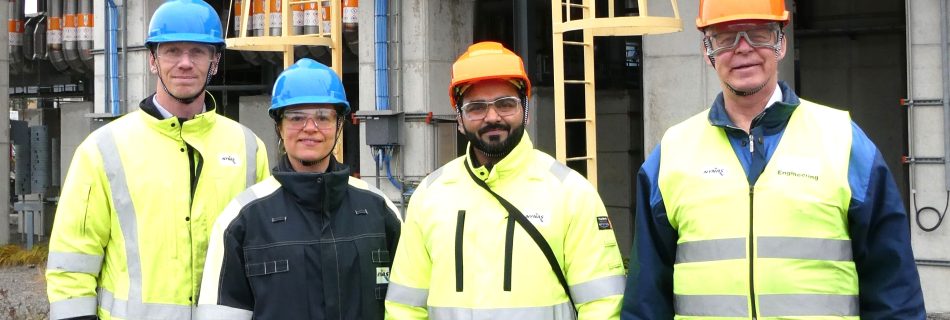
PRESS RELEASE The Swedish deep tech company Cestore AB has developed a new process for cost-efficient, large-scale permanent CO₂ storage, in which emissions are converted into stable, naturally occurring salts. The technology will now be tested in an industrial environment together with Nynas AB, with support from the Swedish Energy Agency.  “Our goal is to bring the technology into industrial operation in the near future,” says Johanna Hultén, CEO and founder of Cestore.  Carbon capture and permanent storage (CCS) have long been considered a “holy grail” of the climate transition and a key enabler of industrial decarbonisation. However, high costs, technical complexity, and extensive infrastructure requirements have limited its accessibility and large-scale deployment.  Founded in 2023, Cestore is developing a solution with the potential to change this landscape: a process technology that converts captured CO₂ into stable, water-soluble salts for permanent storage — locally at industrial sites, without the need for compression, transport, or geological storage.  The technology enables industrial operators to achieve both net zero and permanent negative emissions at lower cost and directly at the point where emissions occur.  “In our process, CO₂ is converted into natural, stable salts that are chemically stored in water, using the same mechanisms by which the oceans naturally stores carbon over thousands of years. This makes local storage possible, directly at the emissions source,” says Johanna Hultén, CEO of Cestore and the innovator behind the process concept.  By transforming CO₂ into naturally occurring salts that can be released into oceans and waterways, the solution avoids costly gas handling such as compression, long-distance transport and pipelines and that are typically required for geological storage.  “If the technology performs as we expect, it could become an extremely cost-efficient way to eliminate carbon dioxide emissions. The process is also energy-positive, meaning that electrical energy is generated as part of the process, which represents an additional advantage,” Hultén adds.  Cestore is now focusing on rapid commercialisation of the technology.  “We believe that future climate infrastructure must be scalable, robust, and local — as well as nearby in the future. Our ambition is for Swedish industry to be able to deploy this solution within the next few years,” says Hultén.  Pilot tests with Nynas  Cestore has recently been awarded SEK 3 million in funding from the Swedish Energy Agency for the pilot project Maris. The project is managed by Cestore, with Nynas AB acting as industrial partner and co-financier.  Nynas’ site in Nynäshamn include a hydrogen production facility emitting approximately 60,000 tonnes of CO₂ annually. According to Peter Eriksson, Chief Technology Officer at Nynas, Cestore’s technology has strong potential to support tangible progress in industrial decarbonisation.  “For a point source like ours, a solution of this kind could be decisive — particularly in combination with future biogenic fuels such as biogas. The project allows us to explore a technology that could deliver both emissions reductions and negative emissions, playing an important role in Nynas’ long-term climate strategy,” says Peter Eriksson.  The project is the first of its kind, with the objective of having a pilot facility in operation at TRL 6 by the summer of 2026. It will also assess the technical, economic, and regulatory prerequisites for a full-scale facility at Nynas’ production site, with a storage capacity of approximately 50,000 tonnes of CO₂ per year.  “There is a strong need for new, effective climate solutions, and Cestore’s technology is a compelling example of how permanent carbon dioxide storage can be made simpler, closer, and more cost-efficient,” Eriksson notes.  Breakthrough technology  In its assessment, the Swedish Energy Agency states:  “…the solution has the potential to contribute to a sustainable energy system through the development of an electrochemical process for permanent carbon dioxide storage, in which CO₂ is converted into stable, water-soluble salts while electrical energy is released. The customer value is clear, and the likelihood of subsequent commercialisation is assessed as good.”  Pilot tests will be conducted at Cestore’s laboratory in close collaboration with Royal Institute of Technology, KTH, focusing on verifying the technology’s performance, efficiency, safety, and scalability. The project will also evaluate regulatory requirements and the conditions for a future commercial facility.  The pilot reactor developed within the project has a storage capacity of 2 kg of CO₂ per hour and will be operated continuously to validate the technology.  “Compared with existing carbon capture and storage technologies, our solution offers several advantages. The process can be integrated directly at the emission source, converting CO₂ into stable salts that are easy to handle and significantly reducing risk, complexity, and cost. In addition, the ability to generate electrical energy as part of the process further strengthens the technology’s potential,” says Johanna Hultén.  Cestore’s ambition is to offer the industry’s most robust and effective technology for managing carbon dioxide emissions and to deliver its first commercial facilities within the next few years.  Contacts  Johanna Hultén, Cestore AB Johanna.hulten@cestoresystems.com +46 722 11 05 45  Peter Eriksson, Nynas AB Peter.eriksson@nynas.com +46 70 318 80 72    Press image  Download image (JPG)  Image caption: From left: Johan Levander, CTO, Cestore; Johanna Hultén, CEO, Cestore; Praveen Patel, Project Manager, Nynas; Peter Eriksson, Chief Technology Officer, Nynas.  In the Maris pilot project, Cestore is developing a new industrial process to convert CO₂ emissions into naturally occurring marine salts. If successful, Nynas’ facility in Nynäshamn is expected to be the first to test the technology at industrial scale within the next few years.    About Cestore  Cestore was founded by Johanna Hultén and Johan Levander with a clear vision: to make the ocean’s natural carbon cycle accessible as an industrial climate solution.  Johanna, a Master of Science in Engineering with a background in the energy sector and industrial climate technology, is the innovator behind the core process concept. Johan brings two decades of experience in developing and leading large-scale process and plant projects within Swedish industry.  Cestore’s technology is based on the same chemical mechanisms as the ocean’s natural buffering system. Through an electrochemical process, captured CO₂ is converted into stable, water-soluble salts (DIC) that can be integrated into the natural carbon cycle of oceans and waterways — an internationally recognised form of permanent storage.  The solution eliminates much of the risk, complexity, and cost associated with traditional geological CCS. The technology is modular, energy-efficient, and designed for direct integration into existing industrial processes, with scalability from approximately 50,000 to more than 200,000 tonnes of CO₂ per year.  Cestore is building a climate infrastructure that is robust, efficient, and deployable in the near term — directly on site, where emissions occur. 

Cestore opens new project office in the heart of Stockholm

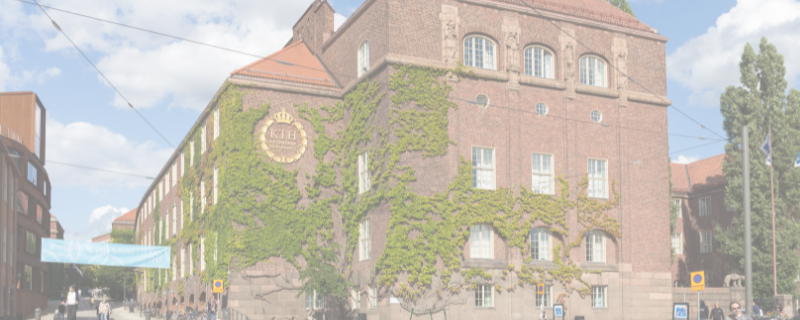
Cestore has opened its new project office at Bastugatan 6, in central Stockholm. The new office complements the technical development taking place at the laboratory at KTH Royal Institute of Technology and provides the team with a dedicated environment for project work and meetings. “It feels meaningful to work right here, overlooking Slussen where Lake Mälaren meets the Baltic Sea — a reminder of why we do this. Contributing to a solution that benefits both the climate and the ocean, and in particular the Baltic Sea, is deeply motivating,” says Johanna Hultén, founder and CEO of Cestore. With the new workspace in place, Cestore continues its work to develop and scale its technology for the permanent conversion of CO₂ into natural, water-soluble salts.

Cestore completes scaled TRL4 prototype and secures IP for core technology with two new patent applications

Cestore has reached an important milestone in the development of its process for permanent carbon dioxide storage. During the spring, the company completed a scaled prototype — approximately 30 times larger than the initial laboratory tests — and the technology has now been independently verified by RISE at TRL 4. TRL 4 means that the technology has been experimentally demonstrated in a laboratory environment and that its core functions operate in practice, in accordance with the Swedish Energy Agency’s definition. In connection with the verification, Cestore has also filed two patent applications protecting the core concept behind the electrochemical process that converts CO₂ into stable, water-soluble salts. “Reaching TRL 4 while simultaneously securing our IP is an important step for Cestore. It gives us a strong technical and strategic platform as we move forward towards the TRL 6 pilot at KTH and continued industrialisation of the technology,” says Johanna Hultén, founder and CEO of Cestore. With the TRL 4 prototype verified and IP protection in place, Cestore now continues its work towards the next phase: scaling, pilot operation, and preparations for full-scale commercial implementation.

Johan Levander joins Cestore as co-founder and CTO

Cestore is strengthening its founding team as Johan Levander joins the company as co-founder and Chief Technology Officer (CTO). Johan brings more than 20 years of experience in designing and leading large process and plant projects within Swedish industry. His expertise in energy and gas processes, as well as industrial scaling, will be central as Cestore moves from laboratory development to pilot projects and commercial implementation. “Cestore’s technology has the potential to change how industry manages CO₂. This is a solution that can be integrated into real process environments, and I look forward to helping take the technology all the way to industrialisation,” — Johan Levander, CTO & co-founder “Johan and I complement each other very well. With his deep industrial experience and my background in innovation and climate technology, we now have a strong team to scale Cestore,” — Johanna Hultén, CEO & founder With Johan’s long-term commitment, Cestore strengthens its ability to industrialise the technology and enable full-scale installations within Swedish industry from 2028.

Cestore Establishes R&D Operations at Granryd Lab, KTH 

Cestore has officially moved into Granryd Laboratory at KTH — an important milestone in the development of our new process for permanent carbon storage.  In September 2024, Cestore established its R&D base at Granryd Lab within KTH’s Division of Applied Thermodynamics and Refrigeration. Granryd Lab is a state-of-the-art research environment that combines experimental test platforms with modelling, simulation and system analysis, and serves as a hub where industry and academia jointly develop sustainable energy systems.  The move marks the starting point for building Cestore’s first prototype and test platform, where our electrochemical CO₂-conversion process will be developed and validated. At Granryd Lab, we gain access to:  Advanced laboratory infrastructure for energy and process systems  Specialised experimental setups, rigs and instrumentation  A fully equipped mechanical workshop for constructing prototype components  Deep expertise in thermodynamics, heat transfer and system integration  An innovation-driven environment designed for industrial collaboration  “Establishing our development environment at Granryd Lab is a major opportunity for Cestore. The lab provides exactly the advanced equipment, expertise and flexibility needed to build and optimise our first prototype. It gives us the right conditions to accelerate our path toward a verified Proof of Concept and onward to pilot-scale testing,” – Johanna Hultén, Founder & CEO, Cestore  At Granryd Lab, Cestore will construct and test the core subsystems of the process, measure mass and energy balances, and verify the conversion of CO₂ into stable inorganic carbonates. This work is a key part of our roadmap toward TRL3–6 and enables close collaboration with researchers and engineers at KTH, as well as third-party validation through RISE.  Our establishment at Granryd Lab is a significant step forward in our long-term development journey — bringing us closer to offering industry a novel, permanent and scalable solution for carbon storage. 

Cestore secures Vinnova funding for development and validation of its CO₂ conversion process

Cestore has been awarded SEK 400,000 in infrastructure innovation vouchers from Vinnova, enabling the development and verification of our first prototype for CO₂ conversion. Through this project, we will build and test a lab-scale prototype at KTH’s Granryd Laboratory, followed by third-party validation by RISE, www.ri.se. The target is to achieve an experimental proof-of-concept and reach TRL 4 for our electrochemical process that converts CO₂ into stable inorganic carbonate species and generates electricity from the process.  “This support allows us to take the crucial first step — to verify the foundation of our technology and build the prototype required for continued development. It reduces risk, strengthens our competitiveness, and accelerates our path toward an industry-relevant solution,” says Johanna Hultén, CEO and Founder of Cestore.  The funding is part of Vinnova’s innovation and infrastructure voucher program, designed to help early-stage deep-tech companies access laboratories, test environments and specialized expertise essential for technology validation. Johanna Hultén och Johan Levander i arbete på KTH, där Cestore genomför första labbtesterna för sin nya elektrokemiska CO₂-omvandlingsprocess, med finasiering av Vinnova. 

Cestore selected to Sting’s Incubate Deeptech Program 2023

Cestore has been selected for Sting’s Incubate Deeptech program – one of the Nordic region’s most respected environments for startups with strong growth potential. Sting is a leading hub in the Nordic innovation ecosystem, supporting early-stage technology companies on their path to scale. Learn more at: www.sting.co  “Being accepted into Sting is an important milestone for Cestore. It gives us access to a network of experts, advisors, and entrepreneurs that will strengthen our journey from technology development to commercialization. We are truly excited and look forward to growing together with the Sting team,” says Johanna Hultén, founder and CEO of Cestore.  Through the program, Cestore will receive support in business development, strategy, fundraising, and access to a strong community of deeptech companies — essential for the next stage of the company’s growth.