
-
Cestore uppnår TRL6 och tar nästa steg mot kommersiell implementering av permanent koldioxidlagring
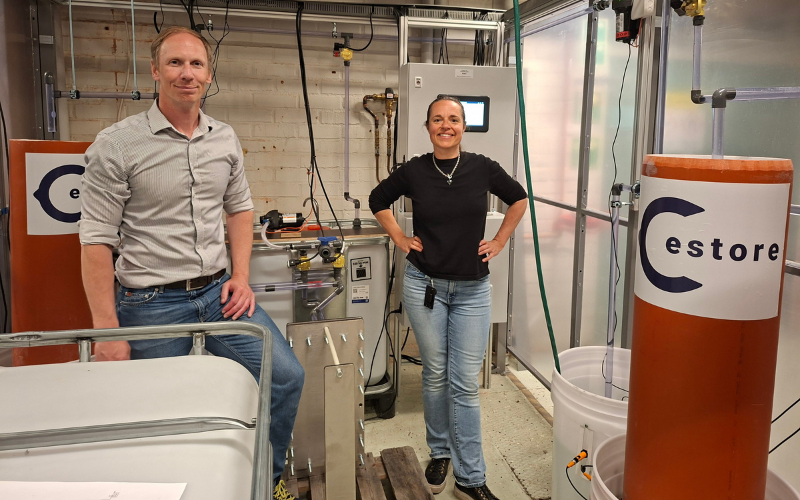
Cestore har framgångsrikt driftsatt sin TRL6-pilotplattform och verifierat teknikens funktion i relevant miljö. Milstolpen markerar ett viktigt steg i bolagets utveckling mot kommersiell implementering av en ny teknik för permanent lagring av koldioxid.
TRL6-pilotplattformen har utvecklats inom projekt Maris tillsammans med Nynas, och genomfört inom ramen för Energimyndighetens utlysning Verifiering av innovation med kund.
Pilotplattformen möjliggör verifiering av Cestores process för att omvandla infångad koldioxid till löst oorganiskt kol som kan integreras i havets naturliga kolcykel för permanent lagring.
I samband med projektets avslutning samlades flera av bolagets industriella samarbetspartners på Granryd Lab vid KTH för att ta del av resultaten och se pilotplattformen i drift. Bland deltagarna fanns representanter från Nynas AB, Skellefteå Kraft, Umeå Energi och Söderenergi.
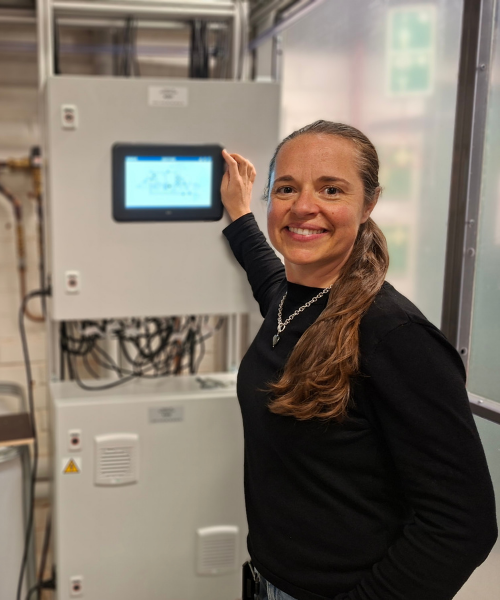
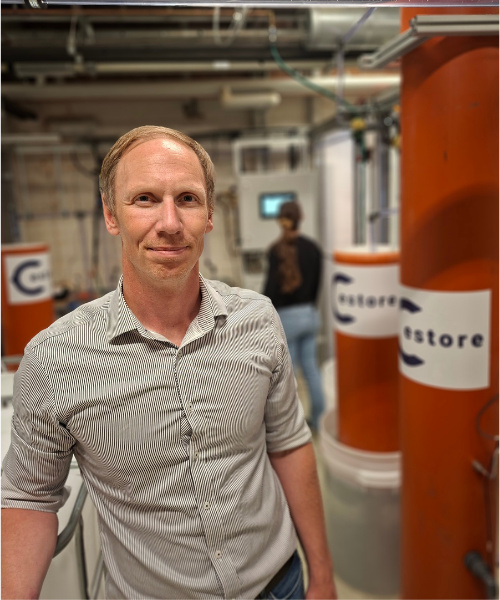
– Att nå TRL6 och få pilotplattformen driftsatt enligt plan är en mycket viktig bekräftelse på tekniken och ett avgörande steg mot nästa utvecklingsfas, säger Johanna Hultén, VD och medgrundare av Cestore.
Parallellt har Cestore lämnat in en ansökan till Energimyndighetens program Industriklivet för att genomföra nästa steg i utvecklingen – en mobil TRL7-pilotanläggning som ska demonstreras direkt vid industriella utsläppskällor tillsammans med flera av de industriella partner som deltagit i Program Maris.
Den planerade TRL7-piloten omfattar demonstration av tekniken i verkliga industriella miljöer och utgör ett viktigt steg mot framtida kommersiella anläggningar.
– Vi ser ett stort värde i det samarbete som byggts upp genom Program Maris. Att flera aktörer nu väljer att fortsätta tillsammans med oss i nästa fas visar på ett starkt industriellt intresse för tekniken och dess potential, säger Johan Levander, medgrundare till Cestore.
Med TRL6 verifierat och pilotplattformen i drift står Cestore nu redo att ta nästa steg mot uppskalning, kommersialisering och framtida fullskaliga anläggningar för permanent lagring av koldioxid.
-
Cestore uppmärksammas i Avfall och Miljö
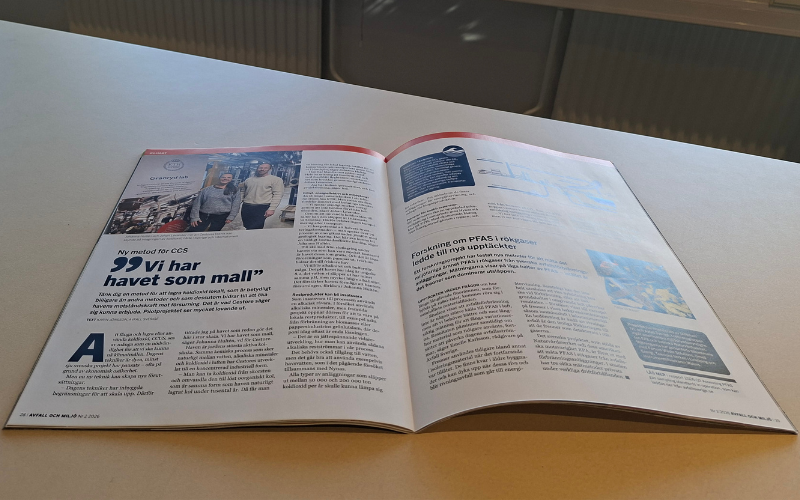
“Ny metod för CCS – vi har havet som mall. Tänk dig en metod för att lagra koldioxid lokalt, som är betydligt billigare än andra metoder och som dessutom bidrar till att öka havens motståndskraft mot försurning. Det är vad Cestore säger sig kunna erbjuda. Pilotprojektet ser mycket lovande ut.”
Så inleder Avfall och Miljö, branschtidningen från Avfall Sverige, sin artikel om Cestore.
I artikeln beskrivs vår teknik för lokal koldioxidlagring och hur den, inspirerad av havets naturliga processer, kan möjliggöra en mer kostnads- och energieffektiv hantering av koldioxid. Genom att omvandla koldioxid till stabila, vattenlösliga salter skapas förutsättningar för lagring nära utsläppskällan, utan behov av omfattande transport.
Artikeln lyfter också teknikens potential att bidra positivt till havsmiljön genom att stärka vattnets buffertförmåga mot försurning.
-
Swedish tech company Cestore develops new process for cost-efficient, large-scale permanent CO₂ storage
PRESS RELEASE The Swedish deep tech company Cestore AB has developed a new process for cost-efficient, large-scale permanent CO₂ storage, in which emissions are converted into stable, naturally occurring salts. The technology will now be tested in an industrial environment together with Nynas AB, with support from the Swedish Energy Agency.
“Our goal is to bring the technology into industrial operation in the near future,” says Johanna Hultén, CEO and founder of Cestore.
Carbon capture and permanent storage (CCS) have long been considered a “holy grail” of the climate transition and a key enabler of industrial decarbonisation. However, high costs, technical complexity, and extensive infrastructure requirements have limited its accessibility and large-scale deployment.
Founded in 2023, Cestore is developing a solution with the potential to change this landscape: a process technology that converts captured CO₂ into stable, water-soluble salts for permanent storage — locally at industrial sites, without the need for compression, transport, or geological storage.
The technology enables industrial operators to achieve both net zero and permanent negative emissions at lower cost and directly at the point where emissions occur.
“In our process, CO₂ is converted into natural, stable salts that are chemically stored in water, using the same mechanisms by which the oceans naturally stores carbon over thousands of years. This makes local storage possible, directly at the emissions source,” says Johanna Hultén, CEO of Cestore and the innovator behind the process concept.
By transforming CO₂ into naturally occurring salts that can be released into oceans and waterways, the solution avoids costly gas handling such as compression, long-distance transport and pipelines and that are typically required for geological storage.
“If the technology performs as we expect, it could become an extremely cost-efficient way to eliminate carbon dioxide emissions. The process is also energy-positive, meaning that electrical energy is generated as part of the process, which represents an additional advantage,” Hultén adds.
Cestore is now focusing on rapid commercialisation of the technology.
“We believe that future climate infrastructure must be scalable, robust, and local — as well as nearby in the future. Our ambition is for Swedish industry to be able to deploy this solution within the next few years,” says Hultén.
Pilot tests with Nynas
Cestore has recently been awarded SEK 3 million in funding from the Swedish Energy Agency for the pilot project Maris. The project is managed by Cestore, with Nynas AB acting as industrial partner and co-financier.
Nynas’ site in Nynäshamn include a hydrogen production facility emitting approximately 60,000 tonnes of CO₂ annually. According to Peter Eriksson, Chief Technology Officer at Nynas, Cestore’s technology has strong potential to support tangible progress in industrial decarbonisation.
“For a point source like ours, a solution of this kind could be decisive — particularly in combination with future biogenic fuels such as biogas. The project allows us to explore a technology that could deliver both emissions reductions and negative emissions, playing an important role in Nynas’ long-term climate strategy,” says Peter Eriksson.
The project is the first of its kind, with the objective of having a pilot facility in operation at TRL 6 by the summer of 2026. It will also assess the technical, economic, and regulatory prerequisites for a full-scale facility at Nynas’ production site, with a storage capacity of approximately 50,000 tonnes of CO₂ per year.
“There is a strong need for new, effective climate solutions, and Cestore’s technology is a compelling example of how permanent carbon dioxide storage can be made simpler, closer, and more cost-efficient,” Eriksson notes.
Breakthrough technology
In its assessment, the Swedish Energy Agency states:
“…the solution has the potential to contribute to a sustainable energy system through the development of an electrochemical process for permanent carbon dioxide storage, in which CO₂ is converted into stable, water-soluble salts while electrical energy is released. The customer value is clear, and the likelihood of subsequent commercialisation is assessed as good.”
Pilot tests will be conducted at Cestore’s laboratory in close collaboration with Royal Institute of Technology, KTH, focusing on verifying the technology’s performance, efficiency, safety, and scalability. The project will also evaluate regulatory requirements and the conditions for a future commercial facility.
The pilot reactor developed within the project has a storage capacity of 2 kg of CO₂ per hour and will be operated continuously to validate the technology.
“Compared with existing carbon capture and storage technologies, our solution offers several advantages. The process can be integrated directly at the emission source, converting CO₂ into stable salts that are easy to handle and significantly reducing risk, complexity, and cost. In addition, the ability to generate electrical energy as part of the process further strengthens the technology’s potential,” says Johanna Hultén.
Cestore’s ambition is to offer the industry’s most robust and effective technology for managing carbon dioxide emissions and to deliver its first commercial facilities within the next few years.
Contacts
Johanna Hultén, Cestore AB
Johanna.hulten@cestoresystems.com
+46 722 11 05 45Peter Eriksson, Nynas AB
Peter.eriksson@nynas.com
+46 70 318 80 72Press image
Image caption:
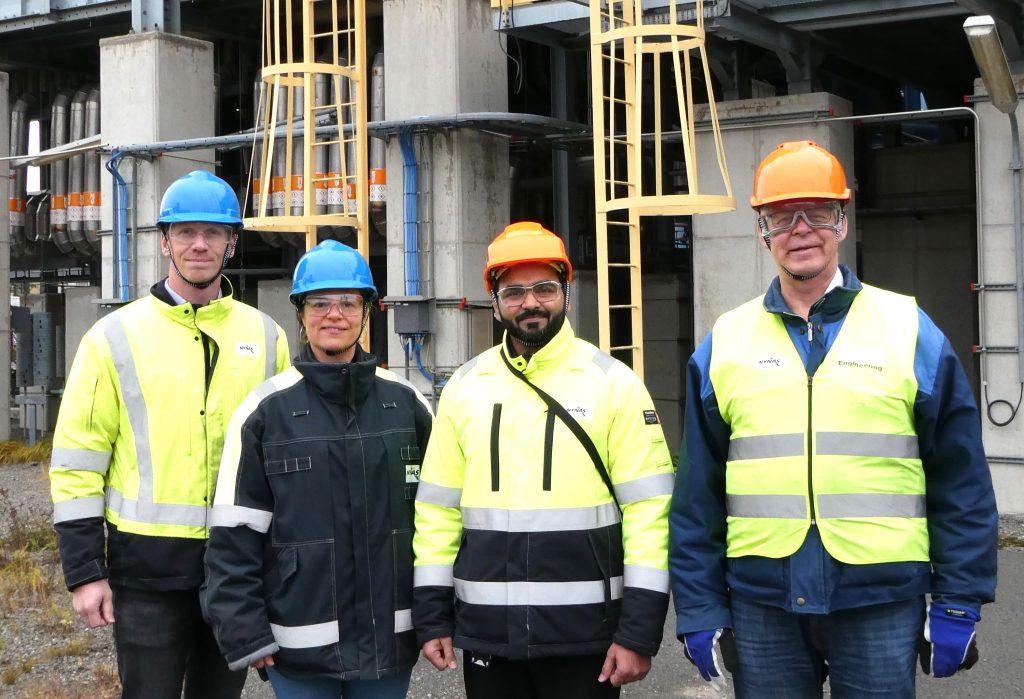
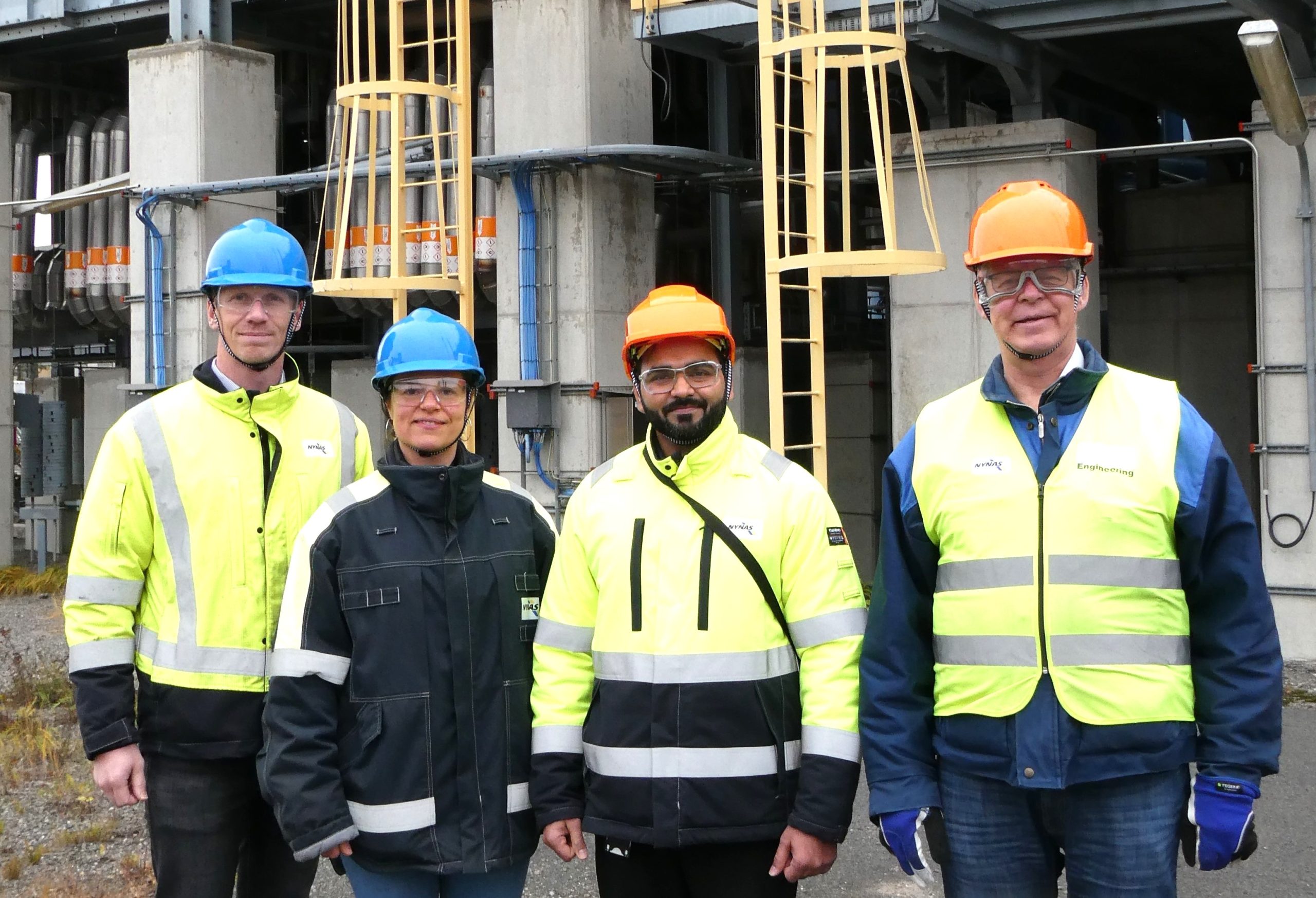
From left: Johan Levander, CTO, Cestore; Johanna Hultén, CEO, Cestore; Praveen Patel, Project Manager, Nynas; Peter Eriksson, Chief Technology Officer, Nynas.In the Maris pilot project, Cestore is developing a new industrial process to convert CO₂ emissions into naturally occurring marine salts. If successful, Nynas’ facility in Nynäshamn is expected to be the first to test the technology at industrial scale within the next few years.
About Cestore
Cestore was founded by Johanna Hultén and Johan Levander with a clear vision: to make the ocean’s natural carbon cycle accessible as an industrial climate solution.
Johanna, a Master of Science in Engineering with a background in the energy sector and industrial climate technology, is the innovator behind the core process concept. Johan brings two decades of experience in developing and leading large-scale process and plant projects within Swedish industry.
Cestore’s technology is based on the same chemical mechanisms as the ocean’s natural buffering system. Through an electrochemical process, captured CO₂ is converted into stable, water-soluble salts (DIC) that can be integrated into the natural carbon cycle of oceans and waterways — an internationally recognised form of permanent storage.
The solution eliminates much of the risk, complexity, and cost associated with traditional geological CCS. The technology is modular, energy-efficient, and designed for direct integration into existing industrial processes, with scalability from approximately 50,000 to more than 200,000 tonnes of CO₂ per year.
Cestore is building a climate infrastructure that is robust, efficient, and deployable in the near term — directly on site, where emissions occur.
Solution
Our solution is a new modular underwater system that removes carbon dioxide from the ocean to restore the carbon balance of nature.
About us
Cestore is a ClimateTech startup founded in Stockholm in the beginning of 2023.